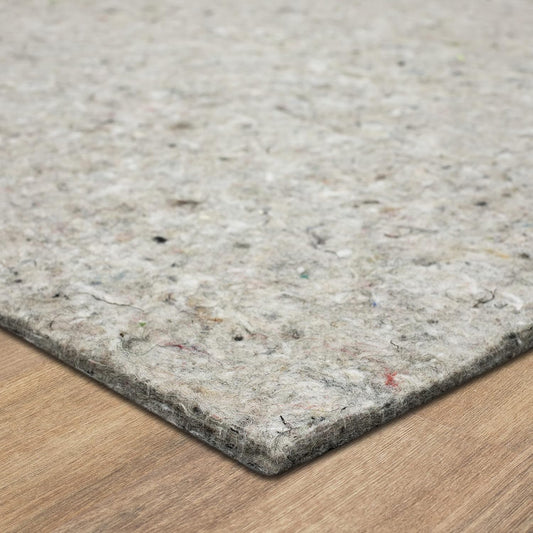
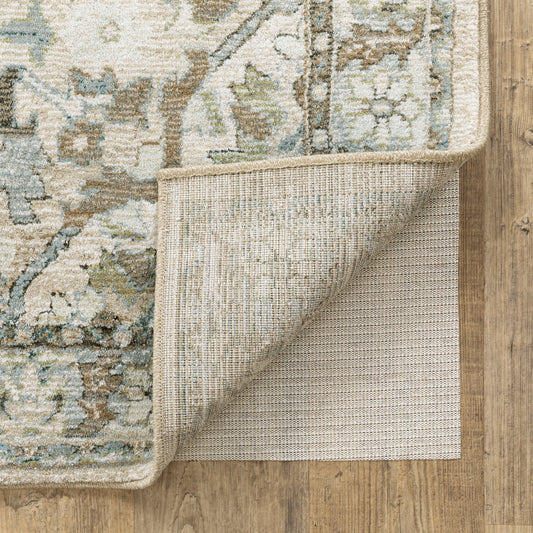
Rectangle rug in a living room with a felt rug pad underneath

Rectangle Rug Pad

Rectangle is the shape most rugs come in — and the shape stock pads fit worst. Ours are custom-cut to your rug's exact length and width, finished 2 inches smaller so the pad hides about an inch in from every edge. Choose felt for cushion and floor protection, felt and rubber for cushion plus natural-rubber grip, or a non-slip grip pad when the rug has to stay put.


Choosing a Pad for a Rectangle Rug

Most rugs are rectangles, and most rectangle pads are stock sizes that only almost fit. Ours are custom-cut to your rug's exact dimensions — trimmed about an inch in from every edge so the pad stays hidden — in felt for cushion or felt-and-rubber for cushion plus grip. Ships free in 1–2 business days, backed by a 10-year warranty.

The most common shape, the worst stock fit

Rectangle rugs are where stock pads fail most quietly. Sizes like 8x10 and 9x12 sound standard, but real rugs are 7'9” x 10'4”, or a hand-made 8'3” x 11'7” — and a stock pad that's a few inches off either hangs past the rug's edge or leaves a border unsupported, where the rug flexes, bunches and wears first. A custom-cut pad starts from your rug's actual measurements, so the support runs evenly underneath instead of approximately.

How to measure, and what we do with it

Measure the rug's full length and width, edge to edge, in a couple of spots — older and hand-made rugs can vary slightly along their length. Order that size. We finish the pad 2 inches smaller in each dimension, about an inch in from every edge, so it never shows and the rug's borders lie flat on the floor. Runners are rectangles too: a hallway runner's pad is simply a long, narrow version of the same cut, made to the runner's full length. The custom-cut rug pad page covers the process in full.

Picking the material for the room

Start with what the rug does all day. In living rooms and bedrooms, where furniture anchors the rug, felt — Eco Felt 1/4 inch, Felt 3/8 inch or Choice Felt 1/2 inch — gives cushion, quiet and floor protection at three depths. In hallways, entries and under dining chairs, where the rug gets pushed, a grip pad earns its place: Extra Grip for hold at minimum height, Comfort Grip when you want cushion with the hold. Matching material to traffic matters more than buying the thickest thing on the page.

Dining rooms: the hardest-working rectangle

If one rectangle in the house earns its pad, it's the dining room rug. Chairs slide in and out thousands of times, always along the same lines, dragging the rug and grinding its backing against the finish. Felt protects the floor and cushions the noise — but if the rug visibly travels despite the table's weight, that's a grip case: Comfort Grip holds it while still cushioning. Either way, make sure the pad is sized to the rug: chairs at the table's edge should still be standing on padded rug, not on the un-padded border.

Cut to your rug, covered for a decade

Every rectangle pad here is custom-cut to your rug's exact size, ships free within 1–2 business days, and is backed by a 10-year warranty.

Rectangle Rug Pad FAQs

How do I measure a rectangle rug for a pad?

Measure the full length and full width, edge to edge, ideally in two places each — rugs, especially hand-made ones, aren't always perfectly consistent. Order the rug's actual size; we cut the finished pad 2 inches smaller in each dimension, about an inch in from every edge. That inset is what keeps the pad hidden and the rug's edges flat.

My rug is between stock sizes. Does that matter?

It's the main reason this page exists. A rug at 8'4” x 11'2” on a stock 8x10 or 9x12 pad is either short a border of support or long enough to peek out — both cause bunching and uneven wear. Custom cutting removes the compromise: the pad is made from your rug's measurements, whatever they are. Odd sizes cost no more than standard ones.

Do you make pads for runners?

Yes — a runner is a long rectangle, and its pad is cut the same way, to the runner's full length and width, finished an inch in on all sides. Hallway runners usually want grip, since they're walked along their whole length: Extra Grip for the thinnest hold, Comfort Grip for hold plus cushion. Under a stair runner specifically, the right product is a stair tread pad, which is a different build made to sit under the runner on each step.

Which material is best for a living room rectangle rug?

Felt, in most cases. The furniture anchors the rug, so grip is rarely the issue; cushion, quiet and floor protection are what a living room asks for. Felt at 3/8 inch is the everyday choice, Choice Felt at 1/2 inch if the room is where everyone lands on the floor. Save the grip pads for rectangles that actually move — entries, halls and dining areas.

How much smaller is the pad than the rug?

Two inches in each dimension — one inch in from every edge. That inset keeps the pad fully hidden, lets the rug's border settle onto the floor so there's no padded ledge to trip on, and still supports the rug across effectively its whole surface. If your rug has a decorative border you want fully supported right to the stitch line, the standard inset already covers it.